Why this installation matters
Proof from a working facility
This project shows how a door package gets matched to one building rather than ordered from a catalog. Two bays, four doors, two different hardware tiers, and a winter-specific detail list, all decided by which end of the wash each door lives on and which direction it faces.
Project detail
The site
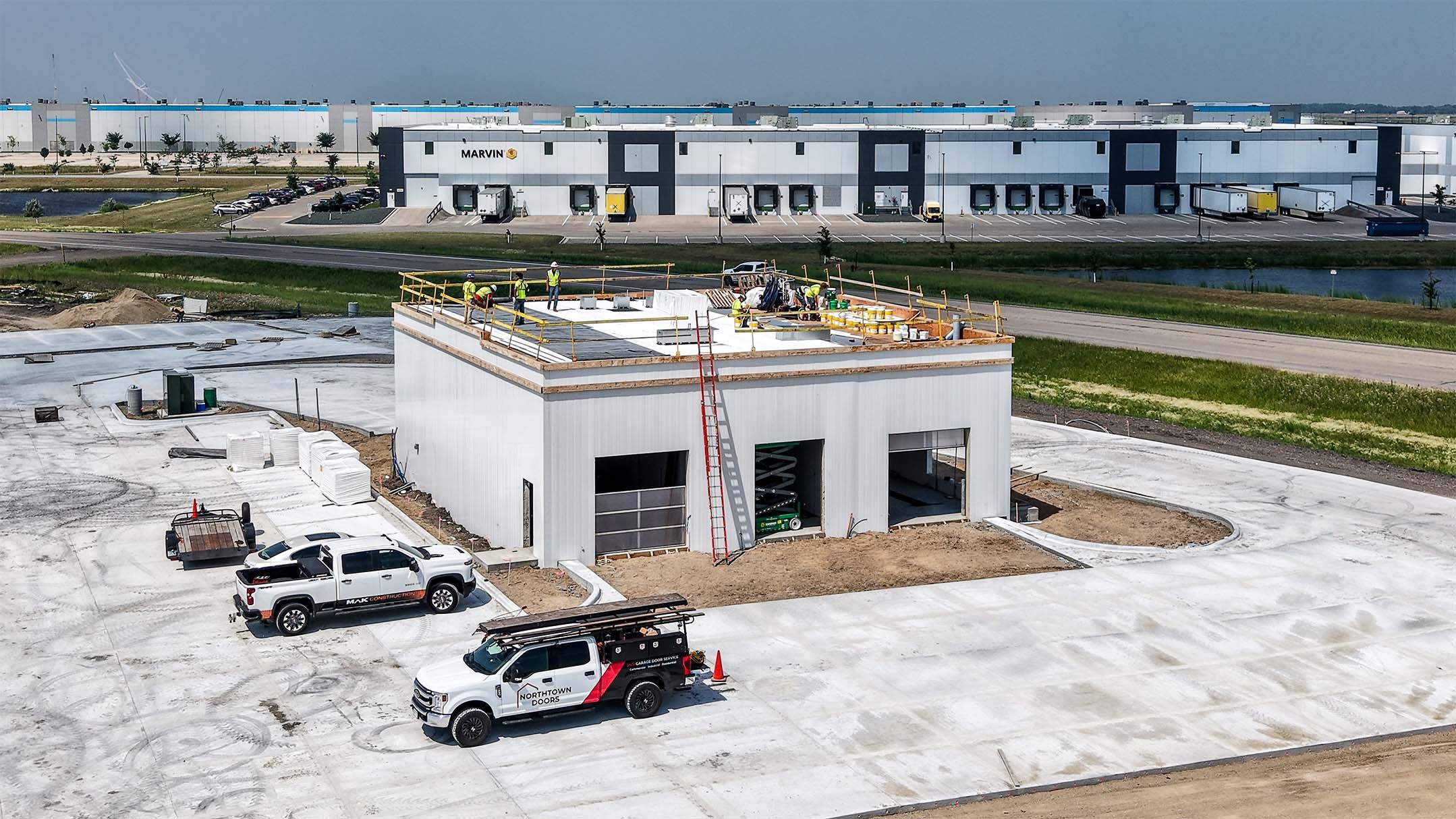
Northdale Oil’s new Fargo travel center sits on the County Road 81 frontage alongside Interstate 29 in north Fargo, in what has become one of the busiest industrial corridors in North Dakota. A Marvin facility sits directly across the road. Behind it runs Amazon’s regional fulfillment center, a building of more than 1.2 million square feet and the largest structure in the state. The interchange nearby is being redesigned by the state DOT specifically because of how much traffic this corridor now carries.
That context is the whole commercial case for the wash.
“It’s an incredible location, next to a window manufacturing facility and next to a very large distribution center. There’s a lot of traffic, and there’s a lot of business that can occur here.”
— Kevin Baumgartner, President, American Garage Door Supply
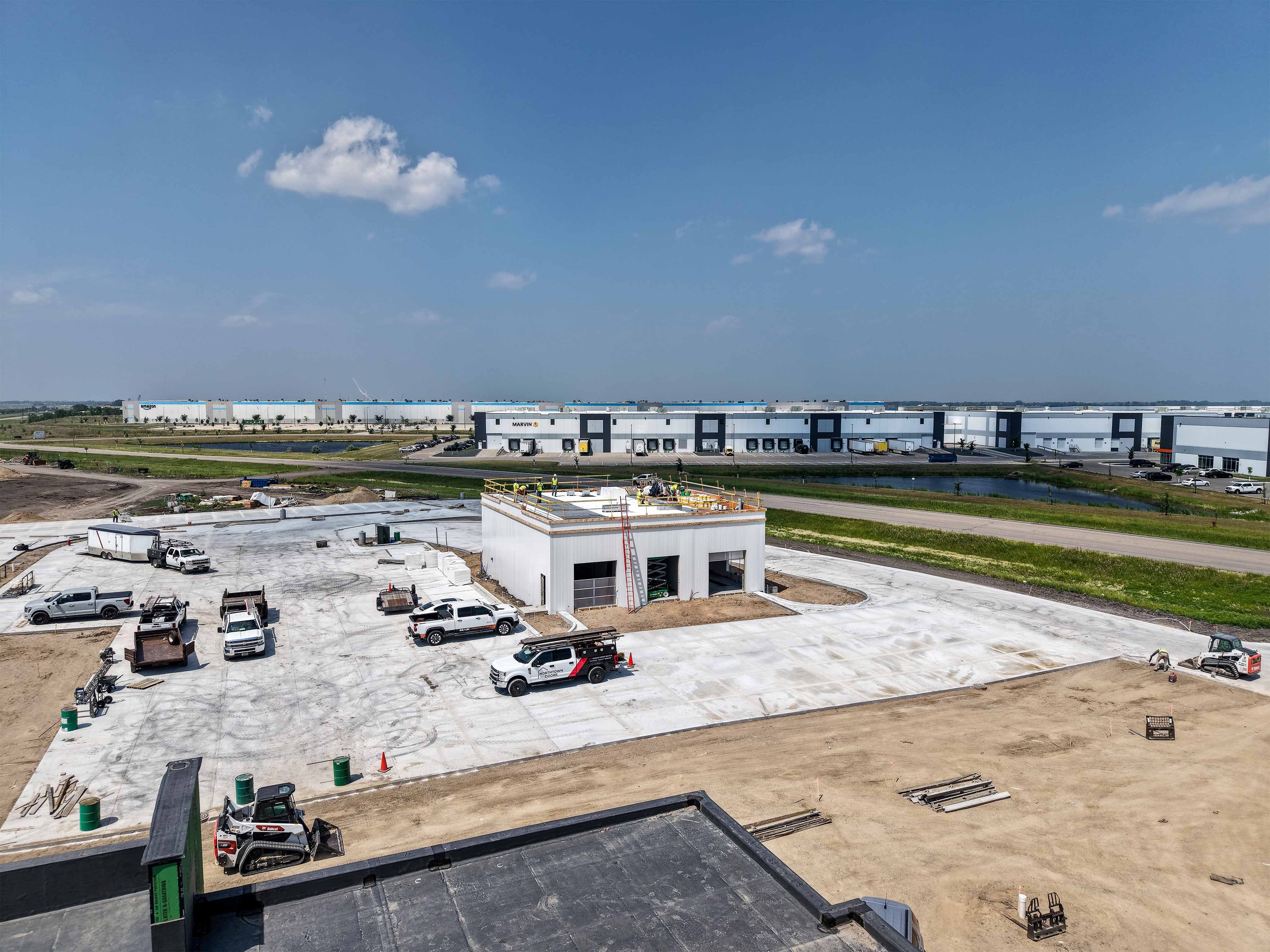
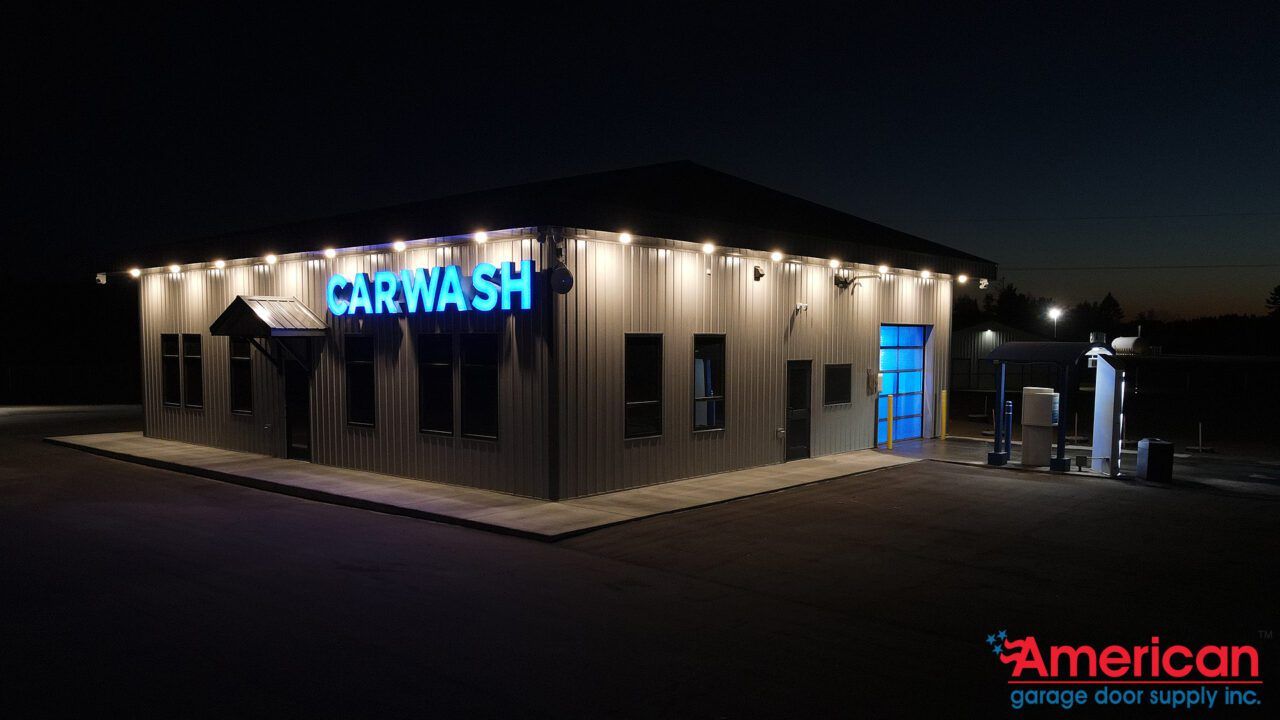
Northdale Oil has been in the fuel business since 1967, when Dale Reck started with a single truck in Bathgate, North Dakota. It is still family-owned, now running more than 30 fuel and convenience locations across the Red River Valley, including the Northdale Car Wash in Bemidji that American Garage Door Supply also supplied. The Fargo build pairs a convenience store with a standalone double automatic car wash, sized for the truck and RV traffic the corridor brings.
The conditions
A car wash is a hard environment before the weather is considered. Chlorinated presoaks, acidic wheel cleaner, and high-pressure rinse water find every plated surface, and the doors cycle with every vehicle. Fargo adds the second half of the problem.
“We’re in Fargo, North Dakota. It can be very windy, it can be very cold, and you can have a lot of snow. In the summertime you can have heavy winds and thunderstorms as well. These doors are going to take punishment from internal and external conditions.”
Two details about this specific building drove most of the decisions. First, the ceiling is 16 feet, taller than the 12 or 14 feet common in car washes, because the equipment package and the vehicles passing through are both taller than average. Second, the bays run north to south, with the entrances on the north side, facing directly into the prevailing north and northwest wind.
The building is precast concrete. That does not change the door itself, but it changes the mounting: we ask for a wood buck or similar mounting surface over the concrete so the track has something to fasten to, and so the door can be adjusted later as the building and foundation move through freeze and thaw cycles.
What was specified, and why
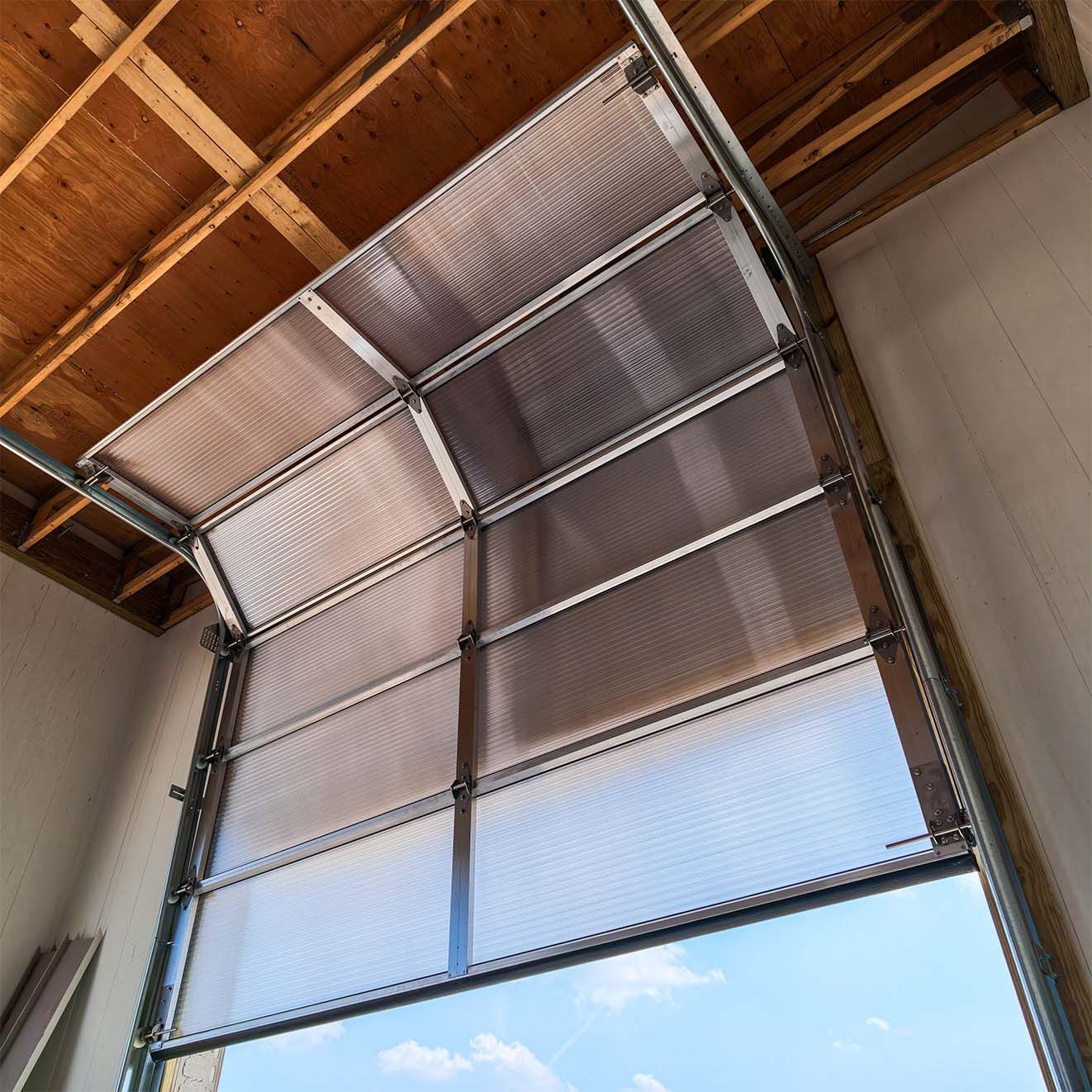
Entrances: Survivor Platinum. The wet end of the wash gets the full stainless package. Stainless steel track, stainless steel springs, stainless face hardware, and stainless or specialty coating on every cast component in the door. That is what survives the chemistry at the end of the bay where the water is.
Entrances get extra struts. Standard practice would not strut these doors heavily. With a north-facing opening in Fargo, it is warranted. Extra struts stiffen the door against wind load so extreme north winds do not work the panels, particularly in winter.
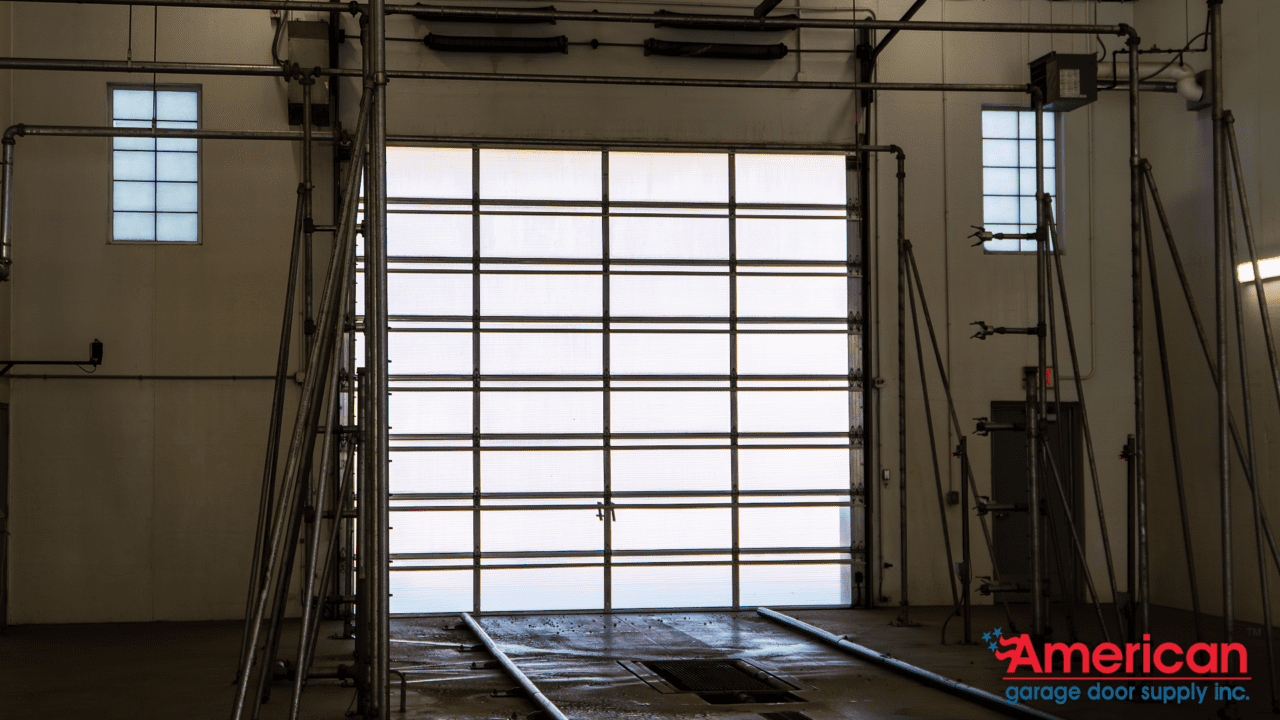
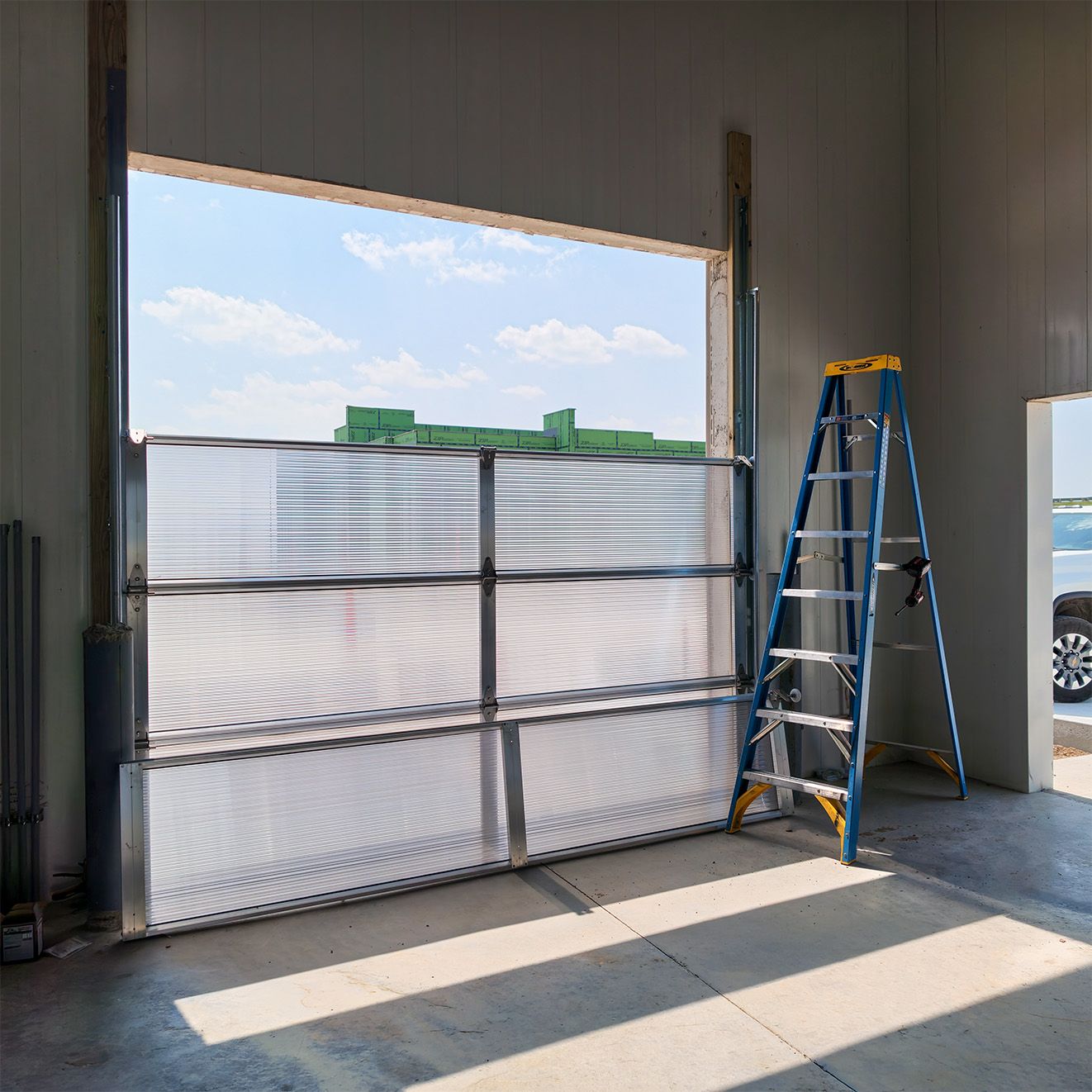
Entrances get one full-vision section. A clear section at eye level lets customers see into the bay and lets passing traffic see the wash running. On a site with this much drive-by volume, that visibility is doing promotional work.
Exits: Survivor Gold. Same stainless face hardware, with galvanized track and springs. The exit sits at the dry end of a bay long enough that moisture is not condensing there, and the 16-foot ceiling leaves ample headroom. Gold is the right answer for that position, and specifying it there rather than everywhere is where the owner’s money stays sensible.
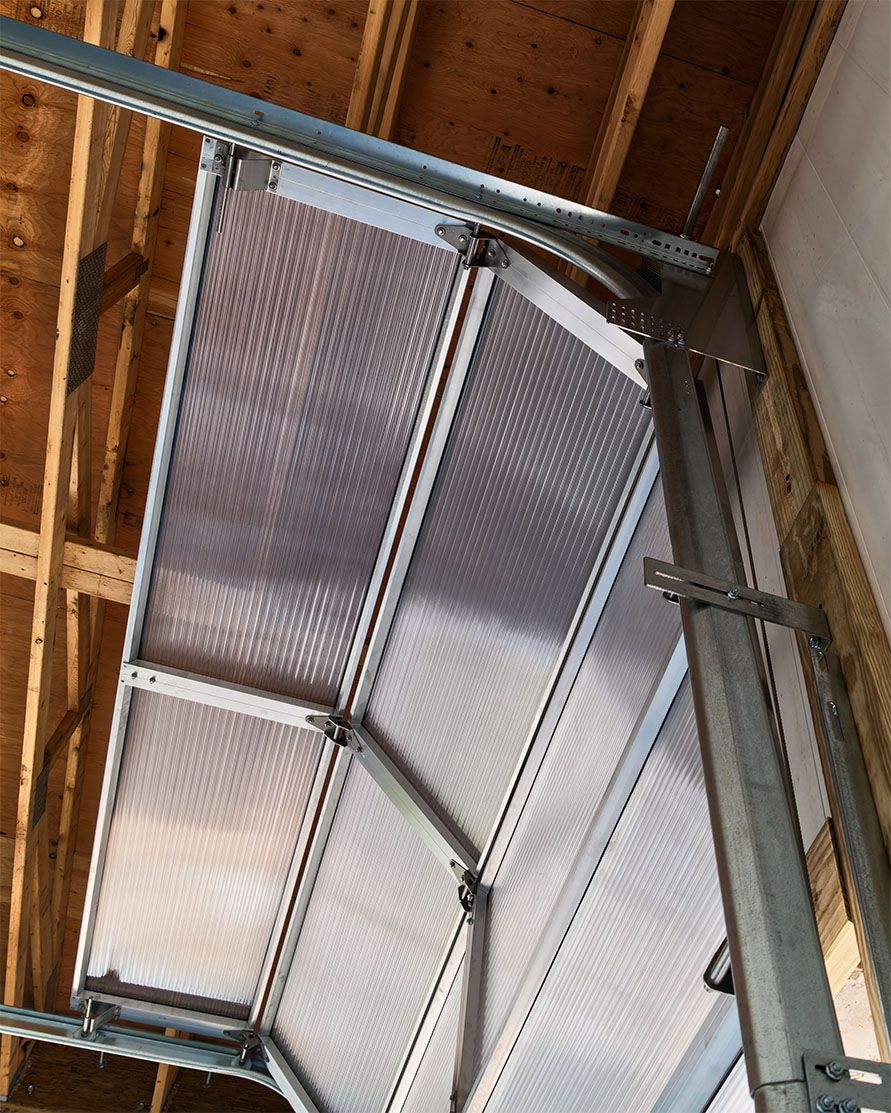
All four doors get the same amount of high lift. High-lift track carries the door above the wash equipment, and the equipment here is taller than usual, so the lift was raised to match while still leaving room to properly back-hang the track. Keeping all four identical matters later: matching parts, matching service, and fewer mistakes when someone calls in about a door.
Operators: Supralift II air-powered. With this much high lift and no dummy sections, an air-powered arm operator would not apply. The Supralift II has been in the market longer than any other air operator and most modern electric car wash operators, which is the argument for it.
“It’s easy to work on, and you don’t have to work on them often. They have a lot of structural integrity and a lot of quality manufactured into them. Less maintenance, less service, less breakdown.”
The details that prevent winter service calls
Most of what separates a wash door that works in January from one that does not is a list of small decisions:
- Top weatherseal, not just perimeter brush. A TS14 dual-contact blade seal mounts on top of the section and seals against the header, so moisture running down the wall migrates onto the interior face of the door instead of collecting in the cavity behind an exterior brush seal, where it would freeze and hold the door down.
- Polypropylene brush seal on the exterior. Polypropylene does not absorb moisture the way nylon does.
- Extra bearing plates. The jackshaft-style operator drives a sprocket and chain, so the end of the shaft gets stabilized to prevent deflection and the chain problems that follow it.
- Stainless back-hang. Two-inch prepunched stainless angle holds the back of the track. It is in a car wash, so it should not be able to rust.
- Stainless chain upgrade. The Supralift II ships with nickel chain as standard, which suits lube and detail bays. A wash gets stainless.
- Liquid-filled filter regulator gauge. Standard gauges rust and freeze in a wash and become a maintenance item. A liquid-filled gauge fights water with water.
- Inline air dryer at the control box. Point-of-equipment drying keeps moisture out of the valve and operator.
- Magnetic contact switch on each door. When the door is fully closed, the photo eyes are switched off, so a piece of debris or a bird cannot trigger a reversal and open a bay on a forty-below night.
- Auto-close timer. An adjustable timer closes the door after a set interval so bays are not left standing open in sub-freezing weather.
- NEMA 4X two-button stations. PBK2 wall stations, rated for wet locations, so controls can sit away from the control box without becoming a service item.
- Emergency open on the control box. If power fails with a customer in the bay, the open button doubles as a pneumatic release, using stored air in the compressor system to bypass the electric coil and open the valve manually. Air operators have no pull-cord release the way an electric operator does, so this is the safety path.
Why this package instead of a fabric door
“Instead of a fabric-style roll-up door, which would not handle the conditions very well in windy Fargo, these doors give a lot of structural integrity. They have translucence, so people can see what is going on. They have curb appeal. They are sturdy, they will handle the wind, and they are very reliable.”
The owner did not spare expense on this facility, and he was not careless with it either. The brief was best value for the conditions, and the conditions here are both a car wash and a North Dakota winter on a north-facing wall.
“After almost four decades of manufacturing car wash doors, we know this is the most proven and sound design for a car wash exposed to these conditions. We know the investment the owner put into this wash, and we wanted to match it with a door solution that matches his needs.”